This book represents a very well documented work on life and works of Samuel F. B. Morse. Strangely, even while a key character in the history of telecommunications, there are not many biographies on him and, of those available, about half of them comes from art historians. Consequently, Botjer’s book contributes to fill the gap since it is mainly focused on Morse’s technologist facet.
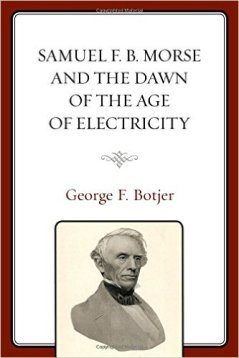 The first part of the book is devoted to Morse the artist. It results quite amazing to learn on how he became one of the top American painters at his time and how, after a trip to Europe in 1832, he suddenly threw all his fame overboard to start working as on the electric
telegraph.
The second part of the book is devoted to Morse the inventor. Botjer offers a very detailed chronicle on the technical issues Morse had to overcome, the financial problems he had to face, and the cruel rivalry he had to fight against during the early years in the telegraphy business.
The last part of the book turns its attention to an interesting topic for historians, which is what an invention does to and for its inventor. Here, Botjer introduces Morse as a controversial person. Not very much gifted with an emotional intelligence, he was not able to keep the friendship of a number of partners who helped him in the development of the telegraph. That is the case of Dr. Charles T. Jackson or Prof. Joseph Henry.
The author also pays very much attention to Morse’s many other activities since he was a renowned public man: enthusiastic supporter of a protestant missionary project in Italy and very much in favor of the Italian unification; contradictory activist both in favor of the slavery and the Union during the American Civil War; as well as founding member of many different US organizations such as the American Foundation for the Promotion of Religious and Scientific Knowledge, the American Inventors Society, the American Asiatic Society, or the remarkable Metropolitan Museum of Art in New York.
Definitively, Botjer’s book is a very interesting and well focused piece of work on Morse as a human being and also on Morse as an entrepreneur, who was able to create, organizes, and fosters the very first profitable application of electricity in history. The electric telegraph contributed to change the 19th century society more than any other technology available at that time.
Available from Amazon.com for Kindle and in hard copy (133 pages).
 Antonio Perez Yuste